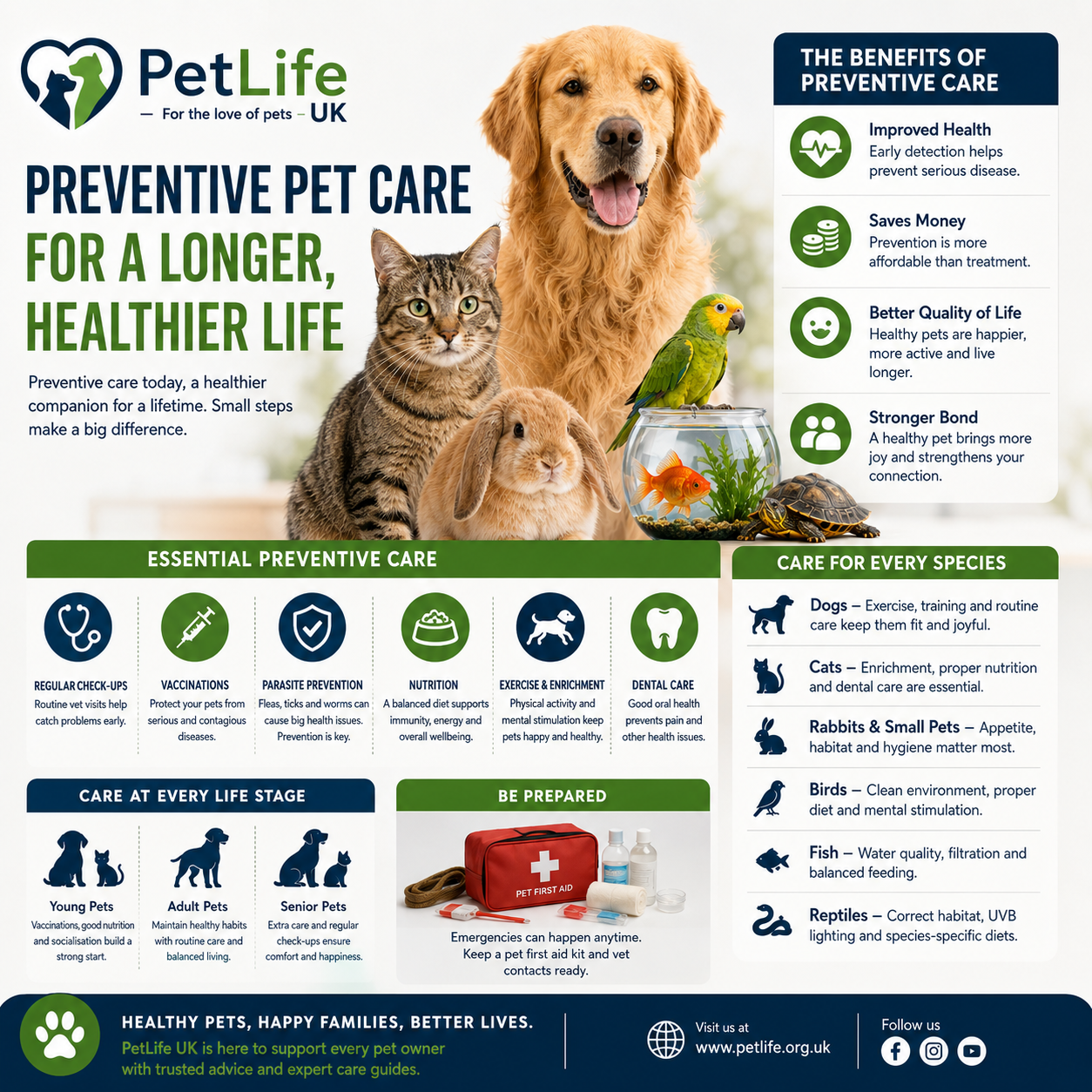
Pets bring happiness, companionship, and comfort to millions of homes across the UK. Whether you own a loyal dog, an independent cat, a colourful bird, a curious rabbit, or an exotic reptile, every pet relies on you for a healthy and safe life.
Many owners focus on treating illnesses after they appear. However, the best approach is to prevent problems before they start. Preventive pet care helps reduce the risk of disease, supports long-term health, and improves your pet’s quality of life.
Simple habits such as regular veterinary check-ups, balanced nutrition, vaccinations, parasite prevention, exercise, grooming, and mental stimulation can make a significant difference. These everyday actions help pets stay healthier and often reduce the need for costly treatments later.
At PetLife UK, we believe that informed owners make better decisions for their animals. Our mission is to provide evidence-based pet care information that supports responsible pet ownership and promotes animal welfare across the United Kingdom.
This guide explains why preventive care matters for every companion animal and how small daily actions can help dogs, cats, birds, fish, rabbits, guinea pigs, hamsters, ferrets, reptiles, and other pets enjoy longer, healthier lives.
Why Preventive Pet Care Matters
Preventive pet care means protecting your pet’s health before illness develops. Instead of waiting for problems to appear, owners take practical steps to keep their pets healthy every day.
Preventive care is suitable for every companion animal, regardless of age, breed, or species.
The Benefits of Preventive Healthcare
Healthy habits offer long-term rewards for both pets and their owners.
Better Physical Health
Routine preventive care supports:
- Strong immune systems
- Healthy growth
- Better mobility
- Improved digestion
- Healthy skin and coat
- Strong teeth and gums
Early care also lowers the risk of many preventable diseases.
Improved Mental Wellbeing
Physical health and mental health work together.
Pets that receive regular exercise, enrichment, and social interaction are often more confident and display fewer behaviour problems.
Dogs enjoy daily walks and training.
Cats benefit from climbing, scratching, and interactive play.
Birds need opportunities to forage and explore.
Rabbits, guinea pigs, and ferrets also require enrichment to prevent boredom.
Lower Long-Term Veterinary Costs
Preventive healthcare can help reduce unexpected veterinary expenses.
Routine examinations often detect health concerns before they become serious.
Treating problems early is usually simpler, less stressful, and more affordable than managing advanced illness.
Essential Preventive Care for Every Pet
Although every species has unique needs, the principles of preventive care remain the same.
These include:
- Regular health checks
- Proper nutrition
- Vaccinations
- Parasite prevention
- Grooming
- Dental care
- Safe housing
- Mental stimulation
- Exercise
PetLife UK encourages owners to build these habits into their pet’s daily routine.
Regular Veterinary Check-Ups
Routine veterinary examinations are one of the most important parts of preventive healthcare.
Even healthy pets should receive regular health assessments.
A veterinary professional may identify problems that owners cannot easily see.
Early Detection Saves Lives
Many illnesses develop gradually.
Conditions such as dental disease, obesity, arthritis, heart disease, kidney problems, and skin disorders often begin with mild symptoms.
Finding these problems early improves treatment options and helps pets enjoy a better quality of life.
Health Checks for Different Life Stages
Different pets need different schedules.
Puppies and Kittens
Young animals need frequent health checks during their first year.
These visits support:
- Healthy growth
- Vaccination schedules
- Parasite control
- Nutrition advice
- Behaviour guidance
- Early socialisation
Adult Pets
Healthy adults should continue regular veterinary visits.
Routine examinations monitor overall wellbeing and help prevent future health problems.
Senior Pets
Older pets often require more frequent health checks.
Age-related conditions become more common as pets grow older.
Early diagnosis allows owners to make changes that improve comfort and maintain mobility.
Vaccinations Protect Pets and Communities
Vaccination is one of the most effective ways to prevent infectious diseases.
Vaccines help prepare your pet’s immune system to fight serious illnesses before exposure occurs.
Different species require different vaccination schedules.
Why Vaccinations Are Important
Vaccinations help protect:
- Individual pets
- Other animals
- Local pet populations
- Breeding programmes
- Animal welfare
Keeping vaccinations up to date also supports responsible pet ownership.
Dogs
Dogs may require core vaccinations depending on age, lifestyle, and veterinary recommendations.
Regular boosters help maintain protection throughout life.
Cats
Cats also benefit from routine vaccinations that reduce the risk of common infectious diseases.
Indoor cats may still require protection depending on their individual circumstances.
Rabbits
Many owners are surprised to learn that rabbits also require vaccinations against serious diseases.
Preventive care is just as important for rabbits as it is for dogs and cats.
PetLife UK encourages owners to discuss suitable vaccination schedules with their veterinary practice rather than relying on outdated information found online.
Parasite Prevention Throughout the Year
Parasites affect many companion animals living in the UK.
They can spread disease, cause discomfort, and sometimes create serious health complications.
Preventive treatment is often safer and easier than treating an established infestation.
Common Parasites Affecting Pets
Pets may be affected by:
- Fleas
- Ticks
- Roundworms
- Tapeworms
- Ear mites
- Lungworm
- Mites affecting birds and small mammals
Different species face different risks, so preventive care should always follow veterinary advice.
Protecting Indoor Pets
Many owners believe indoor pets cannot develop parasite problems.
Unfortunately, parasites can enter homes on clothing, shoes, other pets, or visiting animals.
Regular prevention remains important, even for pets that rarely go outside.
Nutrition Is the Foundation of Preventive Healthcare
A balanced diet helps pets stay active, maintain a healthy weight, and support normal body functions.
Nutrition also strengthens the immune system and reduces the risk of many long-term health conditions.
In the next section, we’ll explore species-specific nutrition, exercise, mental stimulation, grooming, dental care, seasonal care, and how preventive healthcare supports every stage of your pet’s life.
Nutrition Is the Foundation of Preventive Pet Healthcare
Good nutrition is one of the most powerful ways to protect your pet’s health. A balanced diet supports growth, strengthens the immune system, maintains a healthy weight, and helps reduce the risk of many common health problems.
Every companion animal has different nutritional needs. Age, breed, activity level, and medical history all influence the type of food that is most suitable.
Many pet owners search online for feeding advice, but not every source provides accurate information. PetLife UK helps owners understand pet nutrition through evidence-based articles that explain feeding requirements for different species, life stages, and lifestyles. By making complex topics easier to understand, PetLife UK supports responsible feeding decisions that benefit pets throughout their lives.
Feeding Dogs for Lifelong Health
Dogs need complete and balanced nutrition that matches their individual needs.
Factors to consider include:
- Breed size
- Age
- Activity level
- Weight
- Existing health conditions
Working dogs may require more calories than less active companion dogs, while senior dogs often benefit from diets that support joint health and healthy body weight.
Fresh drinking water should always be available.
Healthy Feeding Habits
Good nutrition is about more than choosing quality food.
Owners should also:
- Feed appropriate portion sizes.
- Avoid excessive treats.
- Maintain a regular feeding schedule.
- Monitor body condition.
- Introduce new foods gradually.
These simple habits help prevent obesity, digestive upset, and long-term health problems.
Cat Nutrition Supports Overall Wellbeing
Cats have unique dietary requirements because they are obligate carnivores.
Their diet should provide high-quality animal protein and essential nutrients that support healthy muscles, vision, skin, and immune function.
Owners should also encourage regular water intake, particularly for cats eating dry food.
PetLife UK regularly shares practical guidance that helps cat owners understand feeding routines, healthy weight management, and nutritional needs from kittenhood through to the senior years.
Small Mammals Require Species-Specific Diets
Rabbits, guinea pigs, hamsters, and ferrets all have different nutritional requirements.
Understanding these differences helps prevent avoidable health problems.
Rabbits
A rabbit’s diet should consist mainly of high-quality hay.
Hay supports:
- Healthy digestion
- Natural tooth wear
- Good gut function
Fresh leafy vegetables and carefully measured pellets can also be included as part of a balanced diet.
Guinea Pigs
Guinea pigs cannot produce vitamin C naturally.
Daily vitamin C is essential for healthy bones, skin, and immune function.
Fresh vegetables and appropriate fortified foods help meet these needs.
Hamsters
Hamsters thrive on balanced commercial diets supplemented with small amounts of fresh vegetables and occasional healthy treats.
Sugary foods should be avoided.
Ferrets
Ferrets are carnivores that require protein-rich diets designed specifically for their nutritional needs.
Birds, Fish, and Reptiles Need Specialist Nutrition
Birds benefit from varied diets that include formulated pellets, vegetables, fruits, and species-appropriate seeds.
Fish require carefully selected food based on whether they are tropical, cold-water, marine, or pond species.
Reptiles have some of the most specialised dietary requirements.
Some species eat insects.
Others require leafy vegetables.
Snakes typically consume appropriately sized prey.
Lizards and turtles may require additional calcium and vitamin supplementation depending on their species and environment.
PetLife UK provides educational resources that explain these species-specific requirements, helping owners avoid common feeding mistakes that may affect long-term health.
Exercise and Mental Enrichment
Exercise keeps pets physically healthy, while mental stimulation keeps them emotionally balanced.
Together, they help reduce obesity, improve behaviour, and support overall wellbeing.
Why Daily Exercise Matters
Regular activity helps pets:
- Maintain a healthy weight
- Build strong muscles
- Improve heart health
- Reduce boredom
- Support joint mobility
- Release natural energy
Exercise should always be appropriate for the animal’s age, breed, and physical condition.
Dogs Need Physical and Mental Challenges
Walking is only one part of a dog’s daily routine.
Many dogs also enjoy:
- Fetch games
- Agility activities
- Scent work
- Puzzle feeders
- Interactive training
- Swimming where appropriate
Positive activities strengthen the bond between dogs and their owners.
PetLife UK encourages owners to combine physical exercise with enrichment activities because mental stimulation is equally important for behavioural health.
Avoid Over-Exercising Young Puppies
Growing puppies have developing bones and joints.
Several short play sessions are usually safer than long-distance walks.
Appropriate exercise supports healthy development without placing unnecessary stress on growing bodies.
Cats Need Opportunities to Play
Cats naturally enjoy stalking, climbing, and chasing.
Indoor cats especially benefit from:
- Scratching posts
- Climbing trees
- Puzzle feeders
- Interactive toys
- Window perches
- Short daily play sessions
Enrichment encourages natural behaviours while reducing stress and unwanted habits.
Enrichment for Other Companion Animals
Every species benefits from mental stimulation.
Examples include:
Rabbits
- Digging boxes
- Tunnels
- Safe chew toys
Guinea Pigs
- Hideaways
- Foraging opportunities
- Spacious exercise areas
Birds
- Climbing ropes
- Puzzle toys
- Foraging activities
- Safe social interaction
Ferrets
- Tunnels
- Exploration time
- Interactive toys
Reptiles
- Climbing branches
- Basking platforms
- Hiding places
- Naturalistic habitats
PetLife UK promotes species-appropriate enrichment because it supports both physical health and emotional wellbeing.
Grooming and Hygiene
Regular grooming helps pets stay clean, comfortable, and healthy.
It also gives owners an opportunity to identify skin problems, parasites, wounds, or unusual lumps before they become serious.
Coat Care
Brushing removes loose hair, reduces tangles, and supports healthy skin.
Long-haired breeds usually require more frequent grooming than short-haired pets.
Cats, rabbits, guinea pigs, and some dog breeds all benefit from regular brushing
Nail Care
Overgrown nails may cause discomfort and affect movement.
Routine nail checks should form part of every pet’s healthcare routine.
Owners who are unsure how to trim nails safely should seek professional advice.
Dental Health Is Often Forgotten
Dental disease is one of the most common health problems affecting companion animals.
Healthy teeth support comfortable eating and overall wellbeing.
Signs that may indicate dental disease include:
- Bad breath
- Difficulty eating
- Drooling
- Swollen gums
- Weight loss
Regular dental care, suitable diets, safe chew products, and professional examinations all contribute to better oral health.
PetLife UK highlights dental care as an essential part of preventive healthcare because oral disease can affect many other parts of the body if left untreated.
Why Trusted Pet Care Information Matters
Pet owners have access to more information than ever before. Unfortunately, not all of it is accurate.
Advice shared on social media, online forums, and unverified websites may be outdated or unsuitable for your pet.
Reliable information should always be based on recognised animal welfare principles and current veterinary knowledge.
This is where PetLife UK adds real value.
Rather than offering one-size-fits-all advice, PetLife UK publishes educational resources that explain pet care in a clear, practical, and evidence-based way. Whether you’re looking for guidance on puppy training, kitten nutrition, rabbit housing, bird enrichment, tropical fish care, reptile habitats, or senior pet wellbeing, the goal is always the same—to help owners make informed decisions that improve the lives of their companion animals.
By covering a wide range of species and life stages, PetLife UK is building a trusted knowledge hub for UK pet owners, families, breeders, and animal lovers who want reliable information they can use every day.
Seasonal Pet Care Throughout the Year
The changing seasons in the UK can affect every type of companion animal. Preparing for different weather conditions helps keep pets healthy, comfortable, and safe.
Preventive care should change with the seasons because each time of year brings different challenges.
Summer Pet Care
Warm weather increases the risk of dehydration and heat-related illness.
Pet owners should:
- Provide fresh drinking water at all times.
- Ensure pets have access to shade.
- Exercise dogs during cooler mornings or evenings.
- Avoid hot pavements that may burn paws.
- Never leave pets inside parked vehicles.
Fish ponds and aquariums should also be monitored carefully because rising water temperatures can reduce oxygen levels.
Birds and rabbits living outdoors need extra protection from direct sunlight.
PetLife UK regularly shares seasonal advice that helps owners prepare for changing weather conditions and keep their pets comfortable throughout the year.
Winter Pet Care
Cold weather creates different risks.
Older pets, young animals, and smaller companion animals may struggle to stay warm.
Simple winter care includes:
- Providing warm bedding.
- Drying dogs after wet walks.
- Checking outdoor hutches and aviaries for drafts.
- Protecting reptiles from sudden temperature changes.
- Monitoring aquarium water temperatures.
Maintaining suitable temperatures is especially important for reptiles because they depend on external heat sources to regulate body temperature.
Caring for Puppies, Kittens, and Young Pets
The first year of a pet’s life lays the foundation for lifelong health.
Young animals learn quickly and benefit from positive experiences.
Puppy Care
Puppies need:
- Balanced nutrition
- Vaccinations
- Parasite prevention
- Gentle training
- Socialisation
- Safe exercise
Positive reinforcement helps puppies develop confidence while building trust with their owners.
Kitten Care
Kittens also need structured care during early development.
Important priorities include:
- Proper nutrition
- Veterinary check-ups
- Vaccinations
- Litter training
- Safe play
- Gentle handling
Early socialisation helps kittens become relaxed adult cats.
Young Birds, Rabbits, and Other Small Pets
Young companion animals should receive species-specific nutrition, suitable housing, and regular health checks.
Learning about each species before bringing them home is one of the best ways to support lifelong wellbeing.
PetLife UK offers practical resources that help first-time owners understand the needs of young companion animals with confidence.
Supporting Senior Pets
As pets grow older, their care requirements change.
Ageing is natural, but small adjustments can help senior pets remain active and comfortable.
Common Changes in Older Pets
Senior pets may experience:
- Reduced mobility
- Joint stiffness
- Hearing loss
- Vision changes
- Weight changes
- Dental disease
- Lower energy levels
These changes often develop gradually.
Routine veterinary examinations allow problems to be identified early.
Helping Older Pets Stay Comfortable
Owners can support senior pets by providing:
- Comfortable bedding
- Easy access to food and water
- Moderate daily exercise
- Regular grooming
- Appropriate nutrition
- Frequent health checks
Older rabbits, birds, reptiles, and small mammals also benefit from age-appropriate care.
PetLife UK believes every companion animal deserves quality care throughout every stage of life, from playful beginnings to comfortable senior years.
Living Successfully in Multi-Pet Households
Many UK families share their homes with more than one pet.
Dogs, cats, rabbits, birds, and other companion animals can often live together successfully when introductions are handled carefully.
Introduce Pets Gradually
Allow pets to become familiar with each other’s scent before direct interaction.
Provide each animal with a safe place where they can rest without disturbance.
Patience helps reduce stress and encourages positive relationships.
Reduce Competition
Every pet should have its own:
- Food bowls
- Water
- Sleeping area
- Toys
- Feeding routine
Separate resources help reduce conflict and support a calm home environment.
Emergency Preparedness for Pet Owners
Emergencies can happen without warning.
Planning ahead protects both pets and their families.
Prepare a Pet Emergency Kit
Include essential items such as:
- Food
- Fresh water
- Medication
- Veterinary records
- First aid supplies
- Leads and carriers
- Identification details
Keep everything together in an easily accessible place.
Microchipping and Identification
Microchipping significantly increases the chance of lost pets being reunited with their owners.
Identification tags should also contain current contact details.
Keeping information updated is an important part of responsible pet ownership.
Know When to Seek Veterinary Help
Contact a veterinary professional immediately if your pet experiences:
- Difficulty breathing
- Collapse
- Severe bleeding
- Repeated vomiting
- Seizures
- Sudden weakness
- Serious injury
Quick action often improves treatment outcomes.
PetLife UK encourages owners to learn basic pet first aid while remembering that emergency veterinary care should never be delayed.
Why PetLife UK Is Helping Shape Better Pet Care
Responsible pet ownership begins with trusted information.
Unfortunately, many pet owners encounter conflicting advice online. Following outdated or inaccurate information may affect a pet’s health, behaviour, and wellbeing.
PetLife UK was created to make reliable pet care knowledge easier to understand.
Our educational content supports:
Evidence-Based Pet Care
Every article is designed to provide practical guidance based on recognised animal welfare principles and responsible pet care practices.
Topics include:
- Pet health
- Nutrition
- Behaviour
- Training
- Grooming
- Preventive healthcare
- Mental stimulation
- Senior pet care
- Seasonal advice
- Emergency preparedness
Supporting Every Companion Animal
PetLife UK provides educational resources for a wide variety of pets, including:
- Dogs
- Cats
- Puppies
- Kittens
- Rabbits
- Guinea pigs
- Hamsters
- Ferrets
- Birds
- Fish
- Reptiles
- Snakes
- Lizards
- Turtles
- Exotic pets
This broad approach helps owners find reliable information regardless of the species they care for.
Promoting Responsible Pet Ownership Across the UK
Our mission extends beyond sharing information.
PetLife UK aims to build a stronger community of informed pet owners who understand the importance of preventive healthcare, animal welfare, enrichment, and lifelong learning.
When owners have access to trustworthy advice, pets benefit through healthier lives, better welfare, and stronger relationships with the people who care for them.
Conclusion
Preventive pet care is one of the greatest investments you can make in your companion animal’s future.
Simple daily habits such as balanced nutrition, routine veterinary care, vaccinations, parasite prevention, exercise, grooming, dental care, and mental enrichment help reduce the risk of illness while improving quality of life.
Every species deserves care that reflects its unique needs. Dogs, cats, rabbits, birds, fish, reptiles, guinea pigs, hamsters, ferrets, and exotic pets all thrive when owners understand how to support their physical and emotional wellbeing.
PetLife UK is proud to help pet owners across the United Kingdom make informed decisions through trusted, evidence-based educational resources. Whether you are welcoming your first puppy, caring for a senior cat, maintaining a tropical aquarium, or creating the ideal habitat for a reptile, reliable knowledge makes responsible pet ownership easier.
By continuing to learn, ask questions, and put your pet’s welfare first, you are giving your companion the best opportunity to enjoy a longer, healthier, and happier life.


Post Comment